
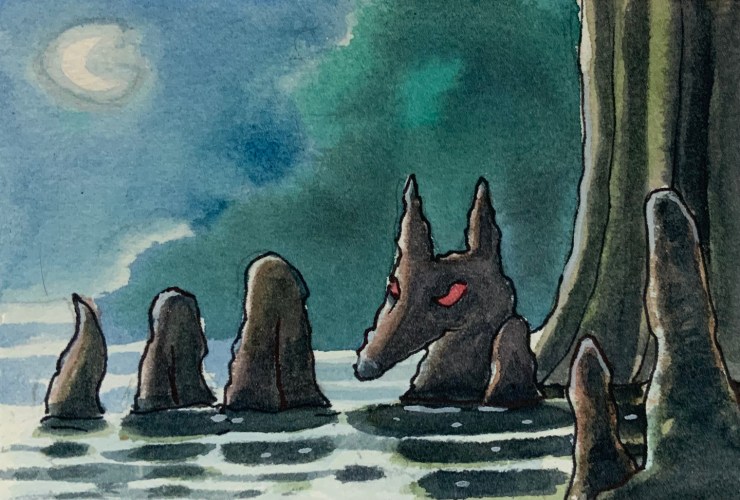
this is an animation project based on my studies and various location visits to the Atchafalaya basin located in southwestern Louisiana.
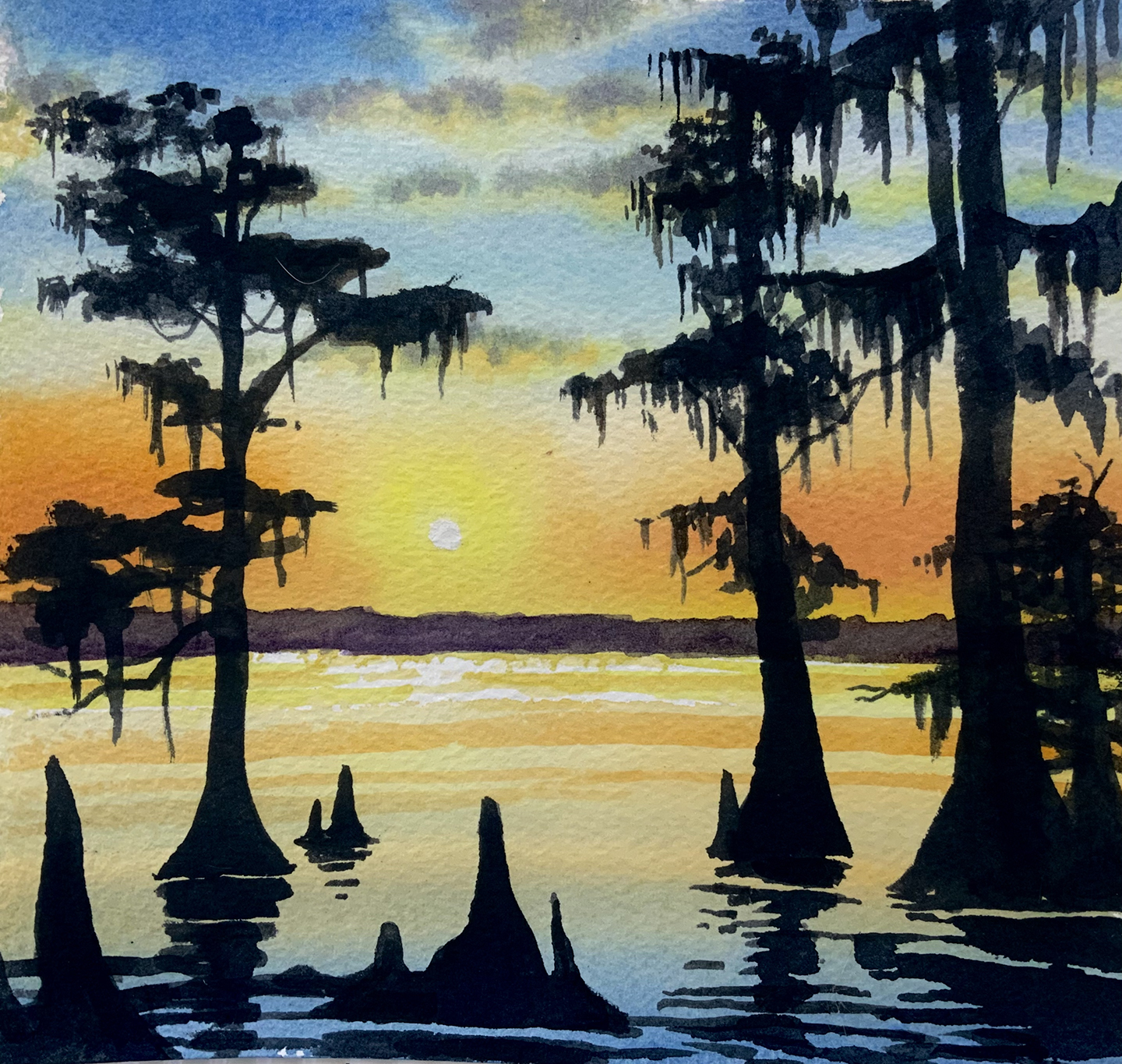
The project is a combination of my music and art where I hope to develop a series of films that are based on this unique region.
“Le Loupgarou” is a film that will showcase the basin as a main character, with a mythological creature, “Loupgarou” or “Rougarou” which is a wolf like human who transcends its negative persona into a protagonist who is the steward or guardian of the vast wetland.
The song “Le Loupgarou” is currently in a basic arrangement with instrumentation still in flux. The fiddle is my first attempt and I hope to either incorporate another musician or further develop my abilities. The guitar and harmonica will be the foundation of the song, and I envision the fiddle and harmonica being the voice of the film and driving the struggles and conflicts that all the inhabitants face.
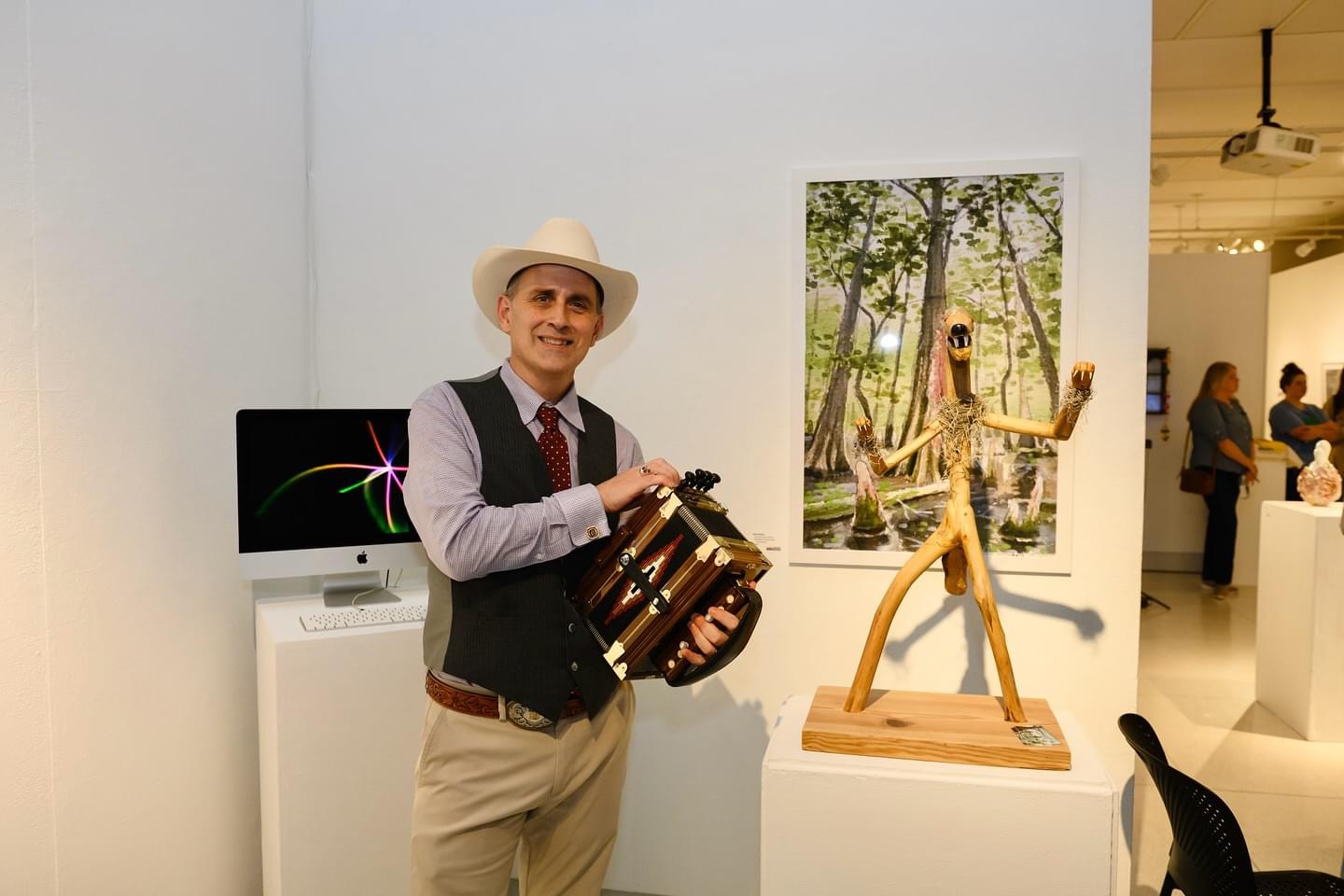
I believe that this allows for greater interpretations and creative liberty. I believe that in a way the Rougarou is the perfect protagonist for the survival of the Atchafalya Basin and all that it impacts. The Rougarou is often misunderstood and feared, but with further exploration and connection with nature, we start to see the value and beauty of the beast that is ultimately our own salvation.


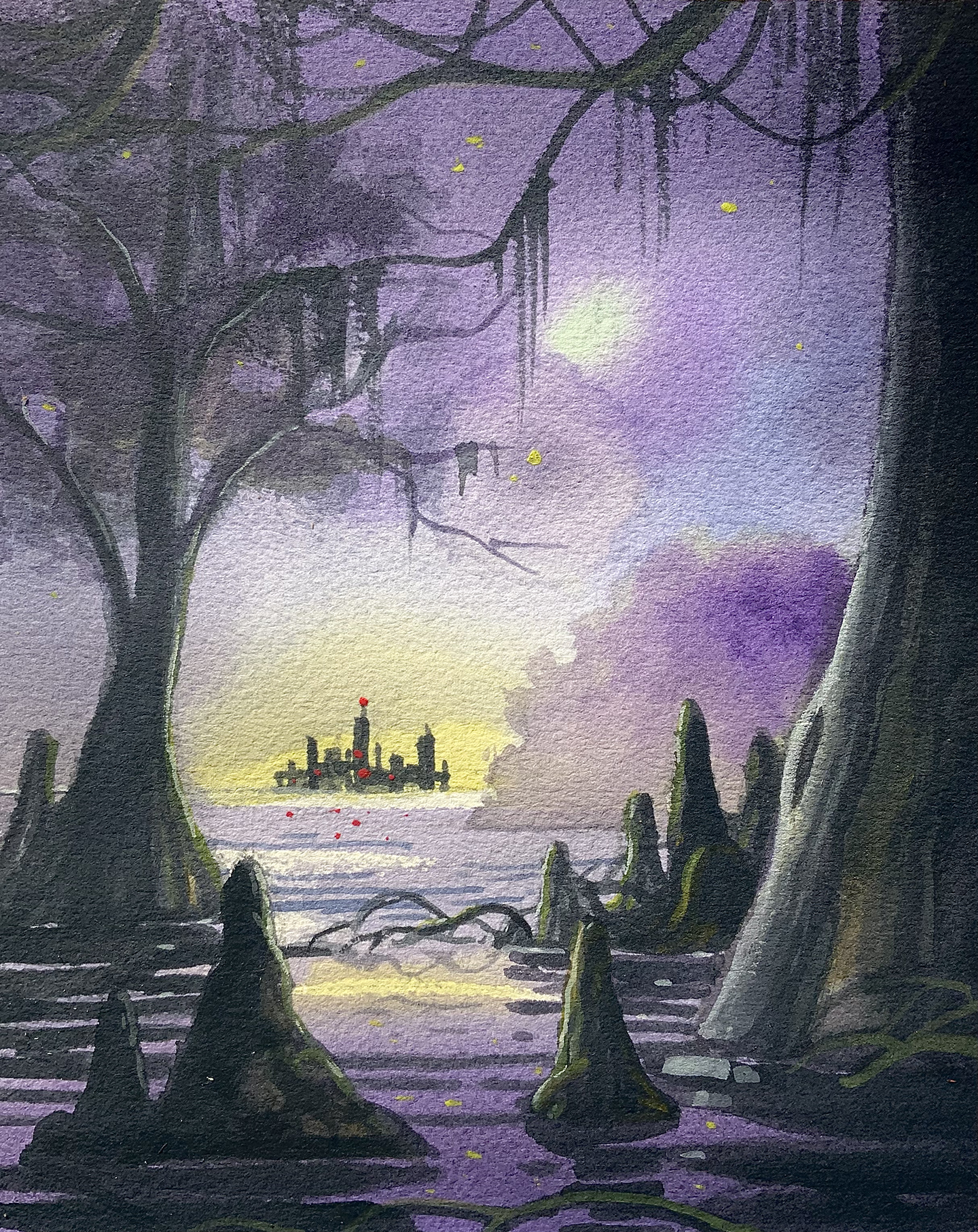
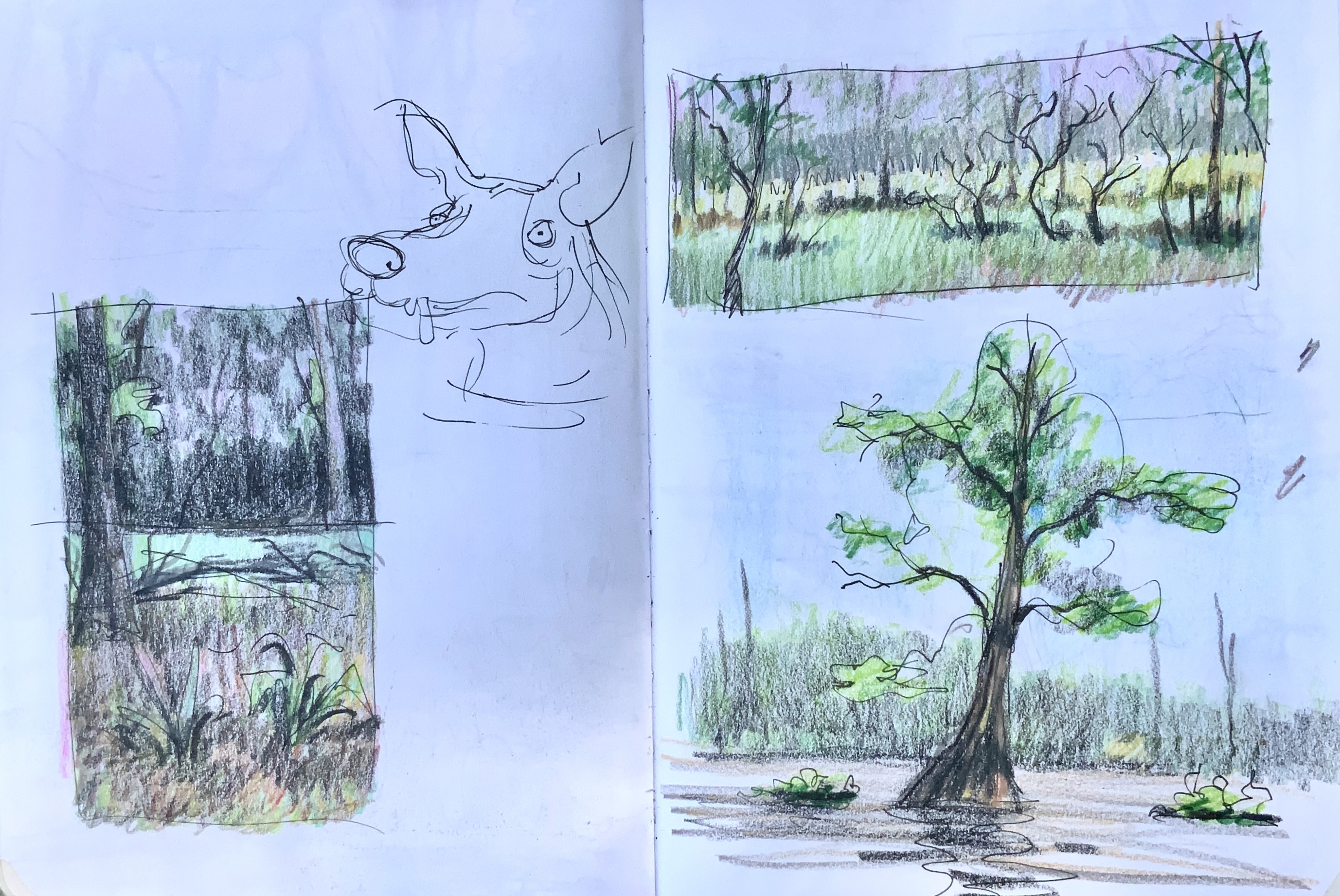
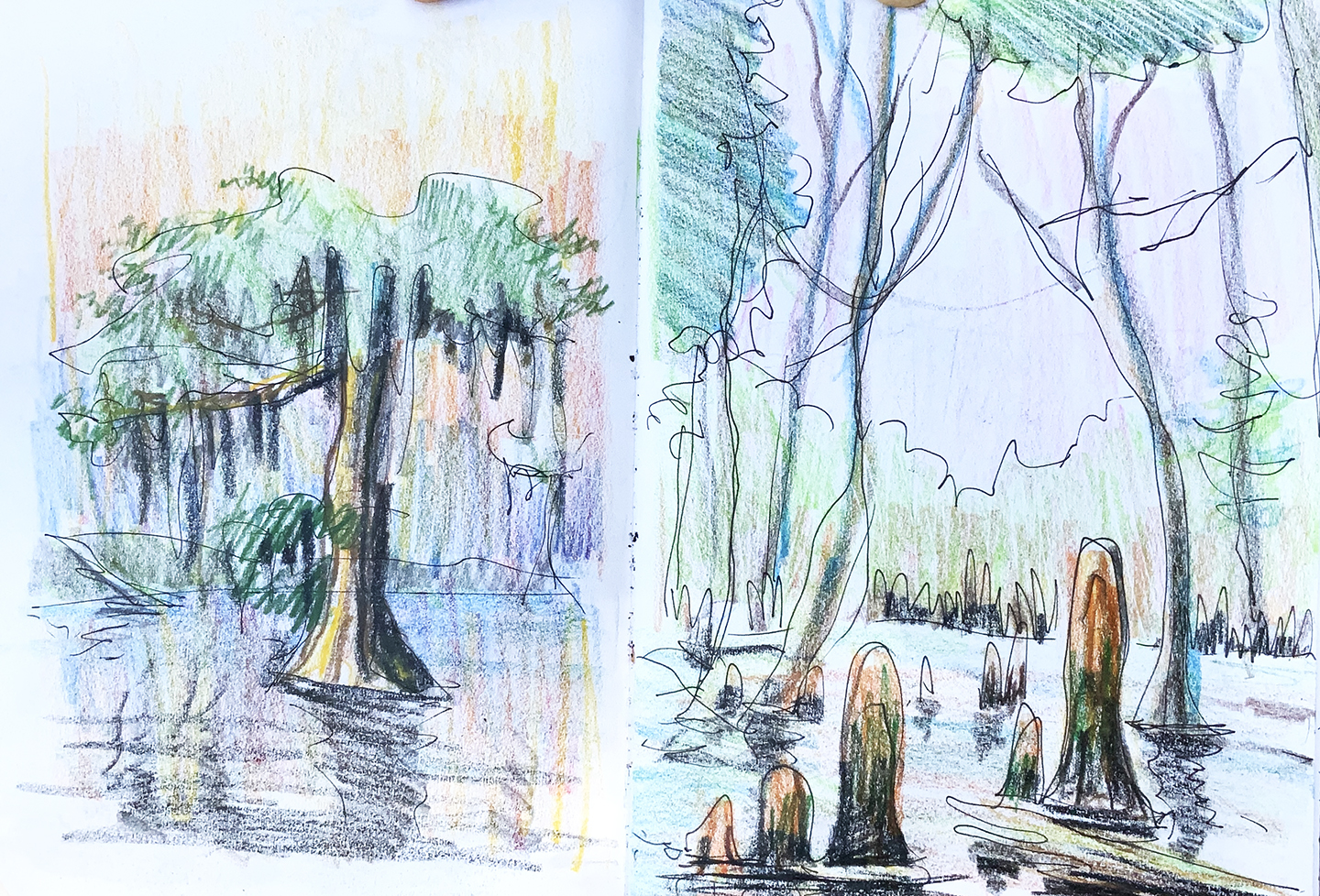


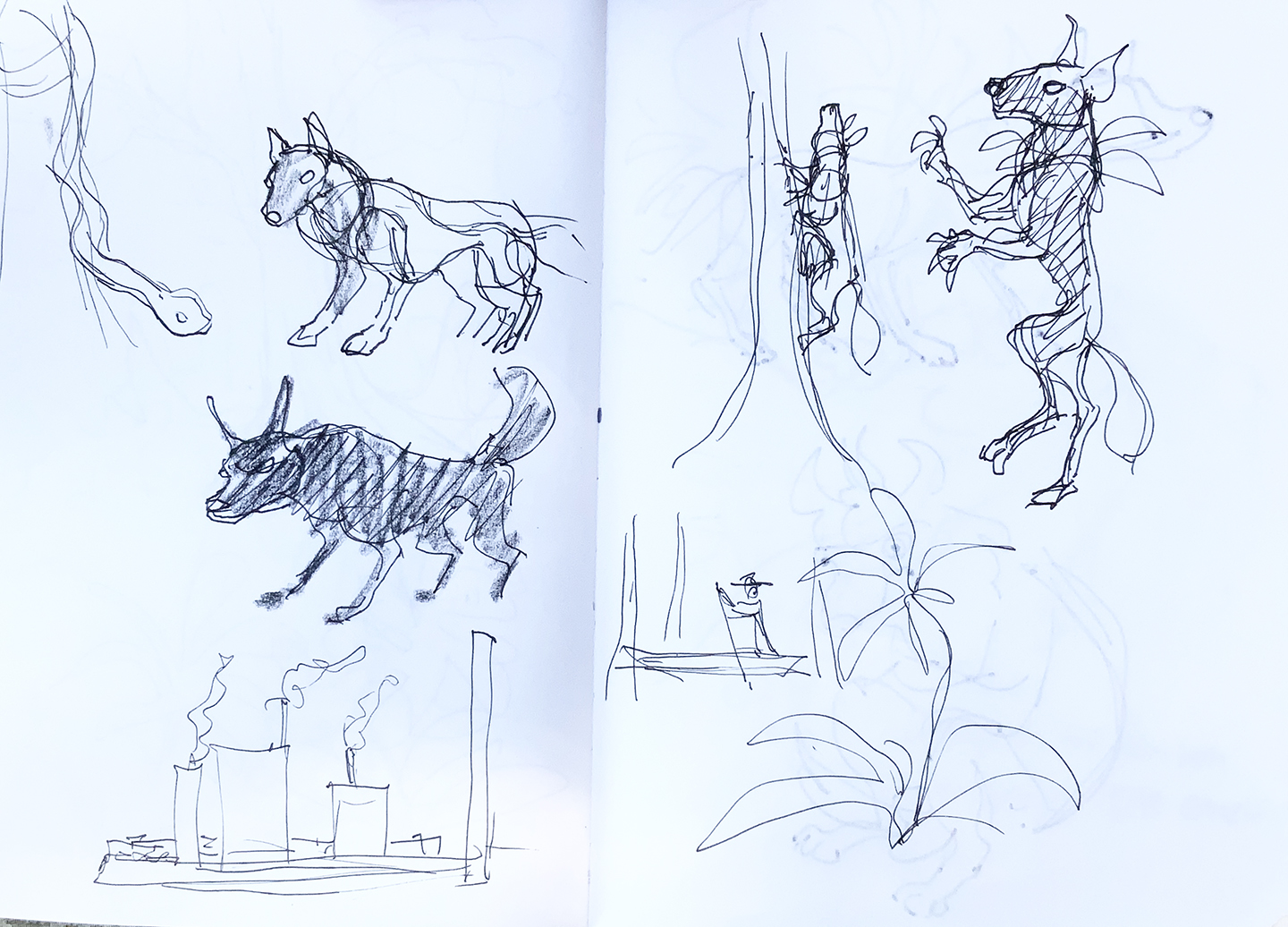

Initial visual research

Loup Garou, Rougarou, Werewolf: origins of cajun folklore
Were wolves, shape shifters, and supernatural beings that transform from human form into various animal beings is a common folk lore through out the world. The Rougarou had first caught my attention when I first explored folk tales and myths from reading several books based in Louisiana. One such book, Gumbo Ya Ya documents various accounts of this mysterious swamp creature.
Here they are known as Loup-Garous, and are the most dreaded and feared of all the haunts of the bayouland. Accounts of lycanthropy are rare in America, but Cajun children are constantly warned, ‘The Loup-garou will get you, yes! You better be good.’ And many of the children’s elders believe emphatically in the existence of these horrible wolf-things. Gumbo Yaya pg 191
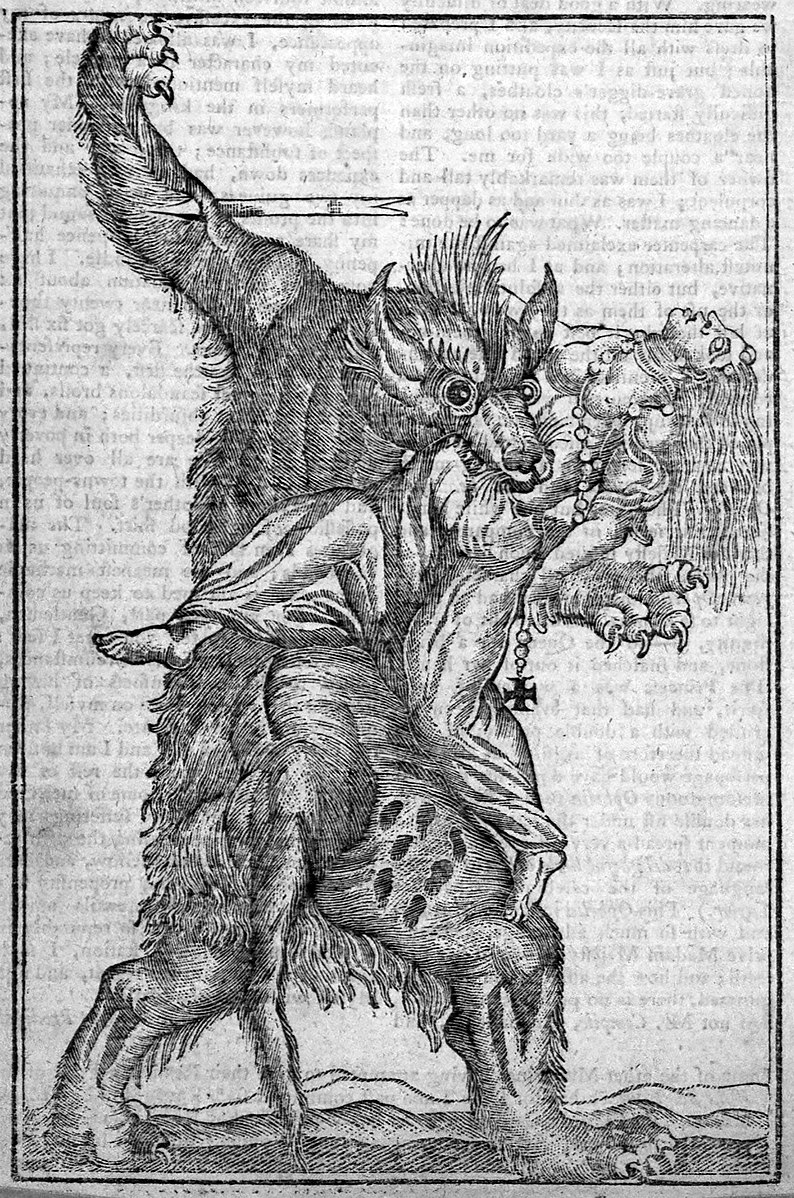
Tracing the origins of the Rougarou or Loupagrou takes us back to medieval France and the Loup-Garou here is a more concrete threat due to actual wolves that populated the various regions of Europe. Often these experiences turned into morality tales about virtue and being a faithful parishioner who must not neglect their Catholic duties.
In most medieval tales, they depict upper-class men transformed into or forced to remain as werewolves by means of female treachery and magic of some sort.https://www.jstor.org/stable/26321112. pg 255

Very similar to woman being accused of witch craft or sorcery, men were vulnerable to being accused of being a Loup Garou, in the case of Gille Garnier, he was accused of various gruesome deaths and mutilations of victims both children and adults after All Saints Day. He was convicted and condemned to be burned alive.
Loup-Garou in Canada
the French-Canadian loup-garou was a malevolent, destructive creature who could nonetheless be “cured”—converted back to full humanity—with surprising ease. Like its French literary precursor, the French-Canadian loup-garou evolved from an oral tradition of folktales; it also engaged central questions of civility versus barbarism, as well as sexuality an gender relations. Yet the French-Canadian werewolf developed in a completely new setting: that of colonizing a new world, including interacting with what Old World discourses termed “savage” peoples and their lore about the territory now being explored and inhabited by European newcomers.https://www.jstor.org/stable/26321112
The Loup Garou starts to take on different meanings and mortality as French travel deeper into North America. With one particular folktale of Angelique and the Loup Garou based from stories collected from Mackinac Michigan.
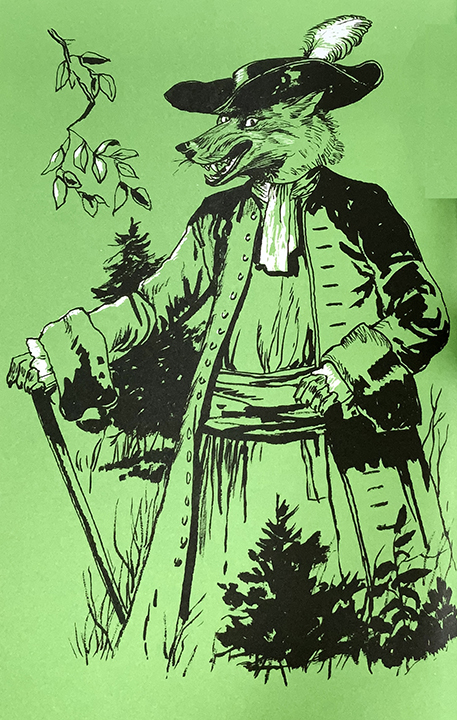
In the ultra-Catholic context of nineteenth-century French-language commu nities in Québec and the Great Lakes region, werewolf tales stress the purity and virginity of the woman, in contrast with the medieval texts’ placing blame on the unfaithful wives. In the French-Canadian context, uncontrolled male sexual desire poses a danger to the community, as the unwanted suitor, or the bridegroom himself, assumes the shape of the loup-garou.https://www.jstor.org/stable/26321112 pg. 260
Les Rougarou in Louisiana
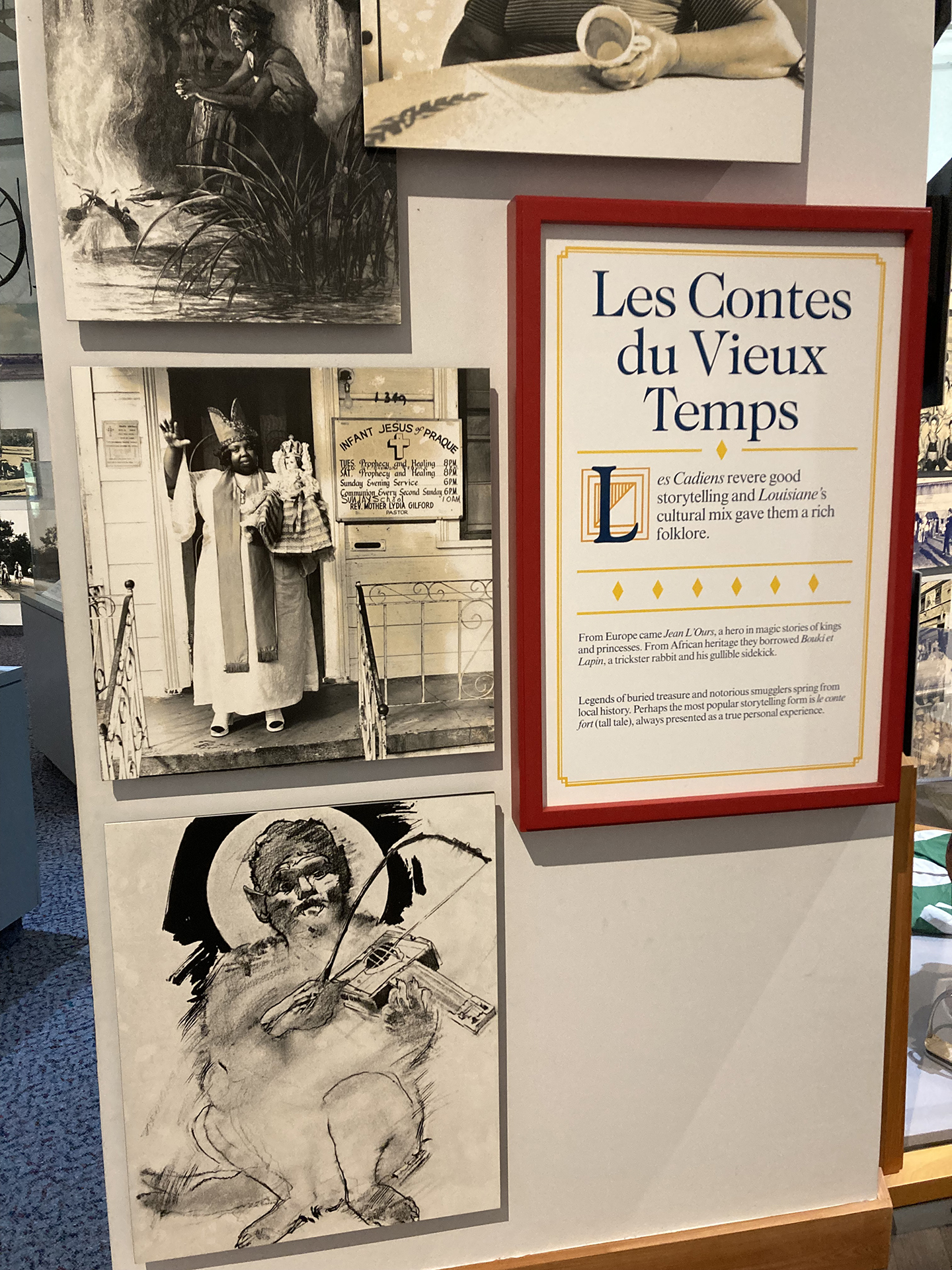
When the Loup-Garou or Rougarou arrived in Louisiana, it lost a great deal of the morality and mythos in transit. Perhaps it was due to the lack of wolves in the swampy southland or assimilated into a hybrid shape shifting folklore with the Houma tribe, but it is hard to to find documentation or published accounts of the Rougarou in any consistent way. The Rougarou is more abstract figure open to more interpretation.
Yet for all of its popularity in the Louisiana folklore pantheon, primary sources and first-person attestations of Loup-garou tales are surprisingly scarce compared to other lesser-known folklore figures. The attestations that exist today, be they in written form or sound recordings, generally fall into one of two categories: personal accounts and mere descriptions of the creature’s traits and characteristics. Folklore Figures of French and Creole Louisiana pg 146
Atchafalaya Basin
The one specific region that has most captivated me was the vast water network of the Atchafalaya Basin. With the old growth Cypress draped with Spanish Moss, various water fowl, vast floral and plant life and alligators all around, it became apparent that I would have to spend time and develop an artistic connection.
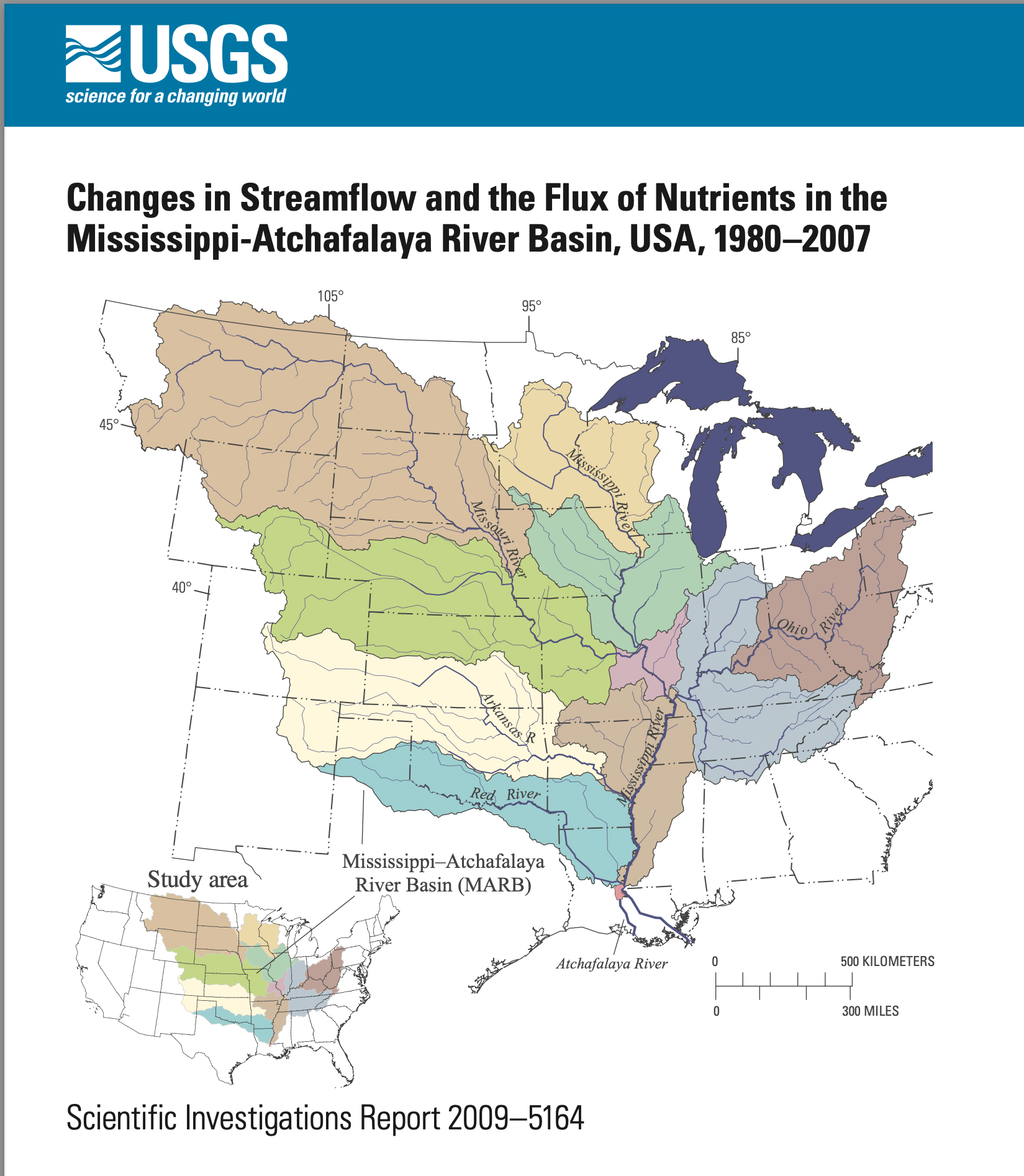
For more than five centuries, the Atchafalaya River Basin has captured the flow of the Mississippi River, becoming the Big River’s main distributary as it reaches the Gulf of Mexico in south Louisiana. This dynamic environment, comprising almost a million acres of the lower Mississippi Alluvial Valley snd Mississippi River Deltaic Plain, is perhaps best known for its expansive swamp environments dominated by bald cypress, water tupelo and alligators. But the Atchafalaya River Basin contains a wide range of habitats and one of the highest levels of biodiversity on the North American continent. –The Atchafalaya River Basin History & Ecology of an American Wetland, Bryan P. Piazza. Texas A&M University Press

I spent time at Lake Fausse State Park and was able to do field studies through video, photography and art from the kayak, on foot and from my cabin on the water.

Audio added a whole other dimension and was fortunate enough to capture some of the sounds of this dynamic place. I plan to take another trip to do more extensive audio recordings as it feeds into my music and eventual sound track for animation.Birds and FrogsOwl
Environmental Challenges
As with any location there are environmental and ecological challenges. Global warming is an obvious challenge as shoreline erosion and rising sea levels have threatened the entire Gulf coast. Ironically it ties into global carbon emissions due to the dependence on fossil fuels which is heavily refined and developed in this region. Hurricane activity has added to the peril and a great deal of coastal communities that are dependent upon the natural resources of this region. Some Cultural Anthropologists are concerned that the unique language and culture of these coastal communities will be lost if people are forced to relocate to another region.
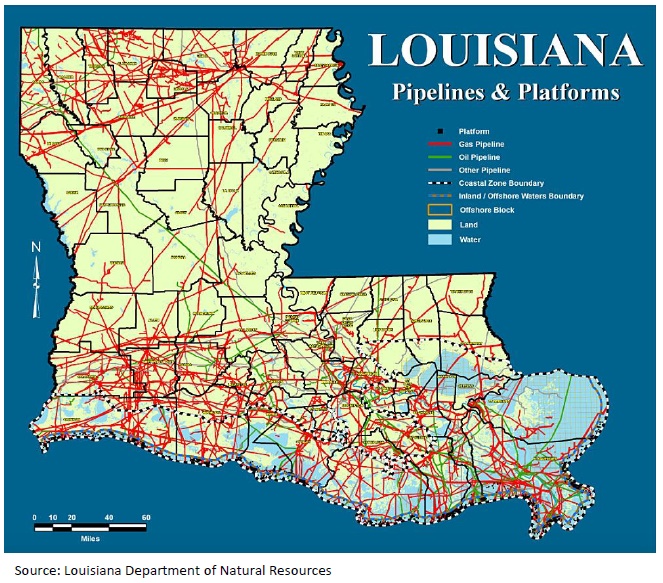
On the flip side, the petroleum industry has created an economy that many people depend upon for a lively hood. There are no simple solutions or consensus on the best course of action or how to even deal with such challenges. The vast oil pipelines hidden beneath the bayous and state are a reminder how closely the region is tied to this industry that is one spill or catastrophe away from permanent damage to the fragile ecosystem that many people depend upon for a sustainable living. I ponder what will happen to all the Injury Lawyers if Louisiana finds alternative to the oil industry.

Heavily Engineered
Similar to the Southeastern U.S. where rivers have been damned and controlled by the Army Corp of Engineers, the Basin has been heavily engineered with damns, pump stations, channels and levees to control flooding, water flow and drainage. This has caused many challenges from oxygen levels to drop due to lack of water flow, severe species loss, invasive plant life and excessive harvesting of Cypress.

- Reverse Flow, Channeling, Dams, Pumps
Petro/Natural Gas Industry
- Pipelines, Barges, Refineries

Cypress Harvesting

Agricultural runoff
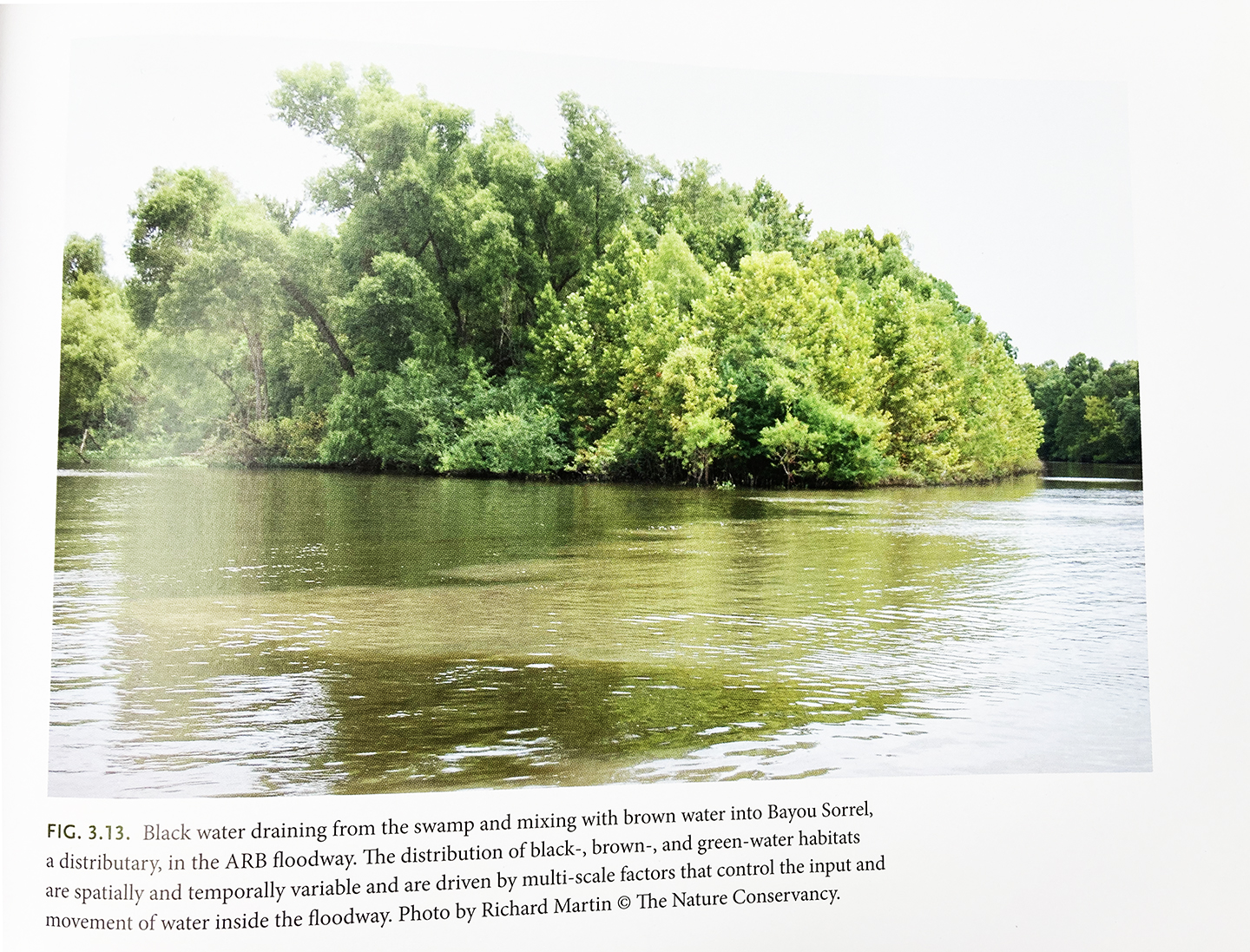
- Hypoxia, lack of Oxygen, Black-Water, stagnation
 David Donar's Creative Research
